
What are dental crowns?
A crown is like if you see somebody smiling and you see what we call teeth. Chances are, most likely you are seeing dental crowns, right? The tooth consists of a few parts. There is a part that is called the root that we don't usually see because it is inside the gum and the bone, and the part that is out of the gum we see as that white or whitish color tooth. That is the coronal portion of the tooth, which we call a crown. There's natural crowns, something that grows in your mouth naturally, or something that could be replaced, like a dentist-made crown to cover your coronal portion of the tooth if it's damaged.
Dental crowns can:
- Support a tooth that has been badly damaged by tooth decay
- Provide an anchor in which to attach a dental bridge
- Provide a more esthetic appearance for a tooth after it has maybe been discolored after a root canal
- Hold together a broken or damaged tooth that has been severely cracked or broken.
- Protect a worn tooth maybe worn down from old age or excessive grinding
Another way in which dental crowns can also be used is to improve the appearance of cracked or misshapen teeth.
- Allow the patient to retain their natural tooth while having it covered with a dental crown, therefore allowing the patient to avoid having the tooth removed and a prosthetic put in its place.
- Add width or length to unsightly or misshapen teeth
- Hide and Mask discolorations of the tooth
- Allow the patient to retain their natural tooth while having it covered with a dental crown
- Provide a cover for a dental implant
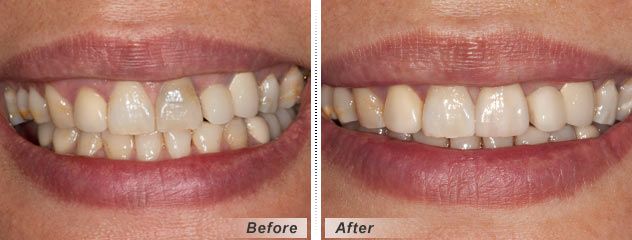
Porcelain crowns not only copy the original tooth but they can be designed to look like the original or even better. The porcelain crowns are ideal for patients who want to have natural looking teeth.
What are the alternatives to dental crowns?
It depends on the damage, right? Many people like veneers, for example, but it's not full coverage for the tooth. It's just partial coverage of the tooth and usually only for the front teeth, not the back. You're not going to get a veneer in the back. There are also other products called inlays or onlays, or 3/4 crowns. It's not a fully covered coronal portion of the tooth. It's just partial coverage of it. If it works in this particular case for that tooth, that's okay to use instead of a crown.
Another option is filling, but filling also has limited application because you cannot make the whole tooth a big filling. Crown stands in a category of its own. Many times it's either that or you pull the tooth out, place an implant, and then you get the crown on an implant. That's the comparison with the crown. The easiest one is just the crown.
What Are The Types Of Dental Crowns And When Are They Used?
Zirconia Crowns
The process is similar to that for other crowns. It involves two stages: preparation (first stage) and the fitting of the crown (second stage). The first stage is where your teeth are assessed and measured for a crown. The dentist will discuss the procedure with you before preparing your tooth.
A small amount of tooth is removed under a local anesthetic which ensures that the tooth is the correct shape for the crown. An impression is made with dental putty which you will be asked to bite into. This is used as a guide for the production of your new crown at a dental laboratory. The second stage is where you will be fitted with your new crown. The dentist will check its appearance and fit before cementing it into position and it is then given a final polish.
Porcelain Crowns - The Advantages
Learn about the advantages and how we have fitted thousands of crowns at our Astoria, Queens dental practice.
At our Astoria practice our dental crowns procedure offers many unique benefits to patients. Steinway Family Dental Center uses porcelain crowns and zirconia crowns for their unique restorative esthetics appearances.
To discuss your options for having a dental crown with Dr. Aleksandr Dayanayev make an appointment today. A new smile is just an appointment away!
Is a dental crown necessary after root canal treatment?
In most cases, yes, it is necessary to get a dental crown after a root canal. There are some exceptions, of course, but it's very rare. For the most part, it is necessary to put a crown on a tooth that had a root canal because the root canal tooth is dead. It's like a dead tree, right? It's more brittle and not flexible anymore. The pressure can actually crack it, and you can lose the tooth even though you had the root canal on it. To protect it, most of the time we put crowns on that.
Can you explain the dental crown procedure?
For something like that, unless you had a root canal, you would need an injection. Once you are numb, the doctor will remove part of your tooth that is decayed and will create a certain geometrical figure in it to receive the crown later on. You will have a temporary crown while you're waiting for that crown to be fabricated, and then you would come in and have them switch. The temporary crown will be taken off, and the permanent crown will be placed on.
Does the dental crown placement hurt?
Most of the work is done in the first visit when you have the tooth prepared, and you would need an injection for that. For the second visit, when you come in to just switch your crown from temporary to permanent, it is a painless procedure. You don't require an injection. At least 99.9% of people don't. If you're still very sensitive or just scared of being sensitive, I'm sure the dentist wouldn't mind giving you an injection.
Are there any consequences of getting a dental crown?
The crown just acts like your natural tooth. You can brush it the same, floss it the same. There are no consequences of getting the crown. You still have to clean it, right? You still have to brush it just like your own teeth.
Is it worth putting children's teeth in crowns?
The answer is yes. There are special crowns used for children. They are designed for the child to keep the tooth until it's going to fall out because it's a baby tooth, right? For baby teeth or deciduous teeth, you can still get a crown to prevent further decay and keep the space for the upcoming permanent tooth. It is important that the tooth lasts until it's time for the baby tooth to come into its place. Therefore, a crown is a vital choice, and yes, it is definitely worth it to put a crown on children's teeth.
Do crowns look like normal teeth?
In some cases, they look even better than normal teeth. Many times, we get patients who argue with us that they never had a crown on this tooth because they get so comfortable. If you look at the teeth, a lot of times you can't tell that the person has a crown until we look at the dental x-rays, which will show for sure that it is a crown.
Can a tooth with a dental crown have a cavity?
Not through the crown. You can get a cavity lower on the root of the tooth, and then it can go underneath the crown, but not through the crown. The crown is not an organic matter where decay will happen. The food will not affect the crown as much as it will affect natural enamel.
How should I take care of my dental crown?
You should brush and floss just like you would with your natural teeth. Remember, this is not your natural tooth, so you still have to take care of it.
How long can you expect the dental crown to last?
It depends on the crown and how you take care of it. If the crown is done correctly and you take good care of it, it can last you a lifetime. That's not to say that if you misuse it, it cannot be replaced. If you're not using it the way it's supposed to be, if you're opening beer bottles with it, you can still break it. Then you would need a replacement.
Also, if you get more dental decay because you're not doing your maintenance on time with the dentist and the hygienist, something else can happen to it, and you would need a replacement for the crown. Most of the time we're replacing crowns is due to neglect, not because something went wrong with the crown itself.
Does insurance cover dental crowns?
Most insurances do. There are different categories of insurances. Some insurance categories would not cover dental crowns, but for the most part, yes, the insurance company would help you pay for the crown. They won't pay for it 100% outright; they will give you some money for it, and you would have some co-payment for that as well.
Regardless of whether the doctor participates or does not participate with your plan, in either case, even if they do participate, there is some portion you would have to pay as co-payments.
Want to learn more? Call Steinway Family Dental Center at (929) 238-9944 or email [email protected]. Our team is happy to answer your questions and help schedule your visit.